Most advice about visiting someone in a nursing home is about what to look for. Is the room clean, is the call bell in reach, is anyone answering it. That advice is useful, and I’ve given plenty of it.
But that isn’t a visit. It’s an inspection. You came to see someone you love, but an hour went by and you talked about the weather and the food and whether the physical therapist came.
During my years as a Long-Term Care Ombudsman, I visited room by room — every resident, every shift pattern — to understand what daily life in the building actually felt like. Making the visit feel good is just as important as assessing quality metrics. Sometimes more so. Sitting across from someone and generating small talk can be draining for both of you, and it’s especially hard on the person who has less new material to offer because they are living the same day in the same building, every day.
Bring something to do instead. Not to perform for them, but to do something with them. Something that gives you both a reason to be in the room besides talking about the lunch menu.
1. Leave the checklist in your back pocket and pull up the playlist.
Do the math from their birth year and pull up the songs that were on the charts when they were about fifteen to eighteen. Not the year they were born — the teenage years. Studies show that music we knew in that age range tends to stick with us longer than what we hear before or after it.
You’ll know within seconds whether you got it right.
And it changes what you talk about. “Do you remember this song” is a question almost anyone can answer, and it usually opens onto a dance, a car, a job, a person — real material, not the weather.
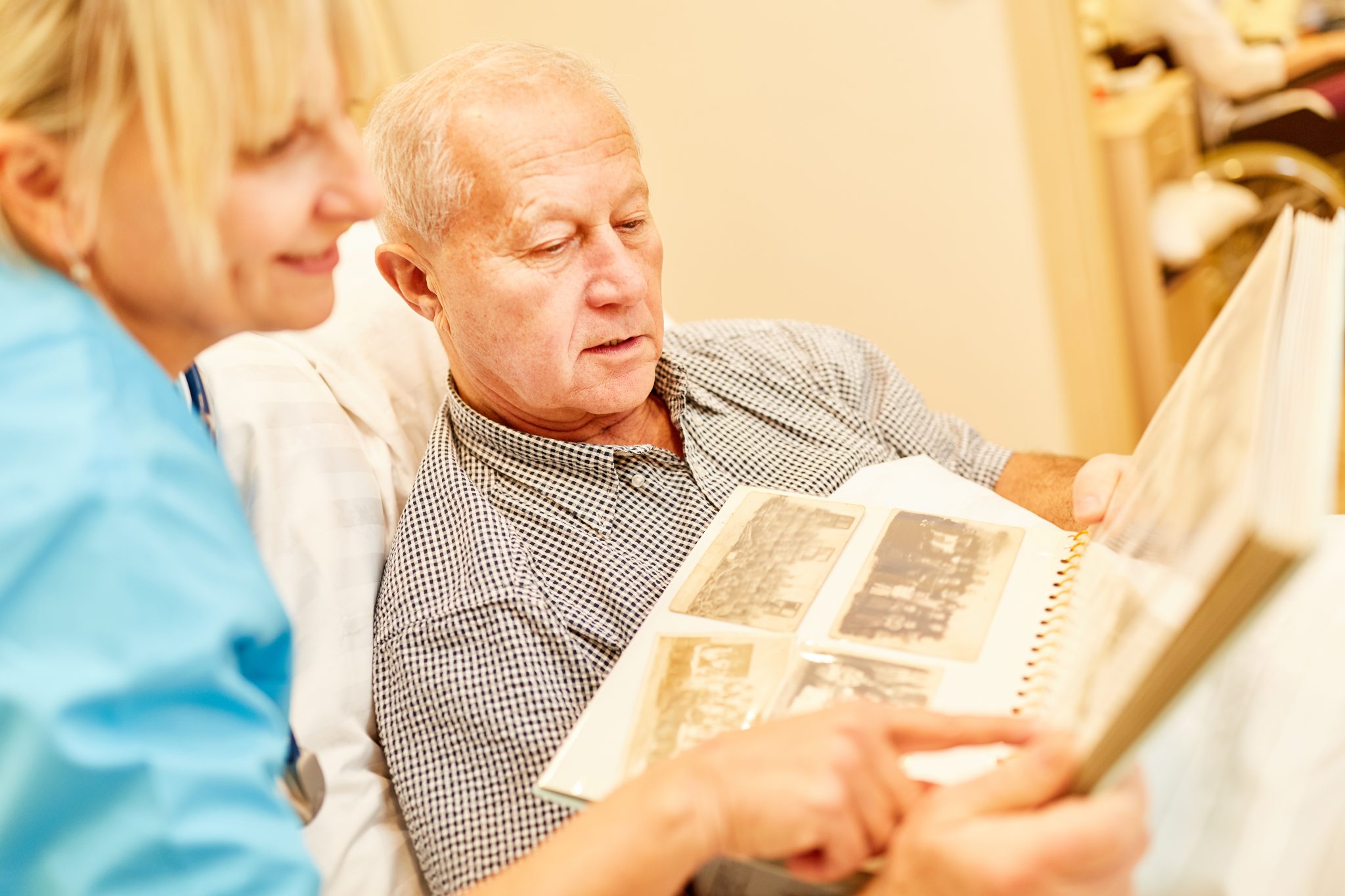
2. Find the yearbook.
I have an Ancestry.com subscription and, with permission, I look up the high school yearbooks of people I visit. Then I print the page.
When I show an older person a picture of their younger selves, the response can be very moving to see. I get to ask about the girl standing next to them, or the club they were in, or why on earth that haircut was so popular.
I also leave the page in the room where staff can see it.
Nobody working in long-term care means to see a resident as only the vulnerable person in front of them. But that’s who they meet every shift, and there’s no natural occasion for anything else to come up. A photograph of a teenager in a graduation cap is a piece of information the staff didn’t have. It changes how people talk to someone. I’ve watched it happen. And if your social media algorithm has you pegged like mine has, maybe you’ve seen the campaign with an older person looking in a mirror at their younger self. It’s powerful.
A word of caution: Because this is genuinely someone’s private history, ask first. Ask the person themselves if they’re able to tell you. If they can’t, ask the family. Some people would love it. Some would not want their seventeen-year-old face on the wall of a semi-private room. Maybe they will keep it folded up in their drawer to show from time to time.
3. Notice when the beauty salon is open.
Many facilities have a beauty salon or barber shop, even if they are staffed by volunteers and aren’t open every day. You can tell which days it’s open. Not because the hair is curled and faces are clean-shaven, but because of the posture.
People with dignity carry themselves differently. There is far more to dignity than being tidy, of course, but appearance is the most immediate part of it a person can still control — and we tell each other this all the time. “Take a shower, comb your hair, you’ll feel better.”
Needing help with a bath doesn’t mean you stop caring about your appearance.
Find out the schedule and help get your person on it. Let the staff know and write the appointment time on the wipe board in the room so no one forgets. Bring the good lotion, the good shaving cream, the favorite perfume — full bottles, not travel sizes.
4. Bring the dog.
Even after his father had passed, a man I knew continued to come every week with his well-trained dog. Not a therapy program with a schedule and a coordinator, just a man and his dog.
I don’t think I ever saw anything else move through a building like that. People who didn’t come out of their rooms came out. People who didn’t track much tracked the dog.
If you have a calm, well-behaved animal, ask the facility what their policy is — most have one, and many will work with you. “Well-behaved” is key; a nervous dog in a hallway full of walkers and wheelchairs is a bad idea. But if yours is the right kind of dog, it may be the single most valuable thing you can bring through the door.
The principle of personhood
Give the person something to be besides a patient.
Everything else in the building is organized around care — necessary, appropriate, and constant. Every interaction is somebody doing something to or for them. An hour when someone is a person who went to that high school, liked that song, walked that dog, wore her hair that way, is a good visit that will last much longer than 60 minutes.
I work with families navigating long-term care placement and the years that follow. If you’re trying to figure out how to stay meaningfully involved, I’m glad to talk.